Old England
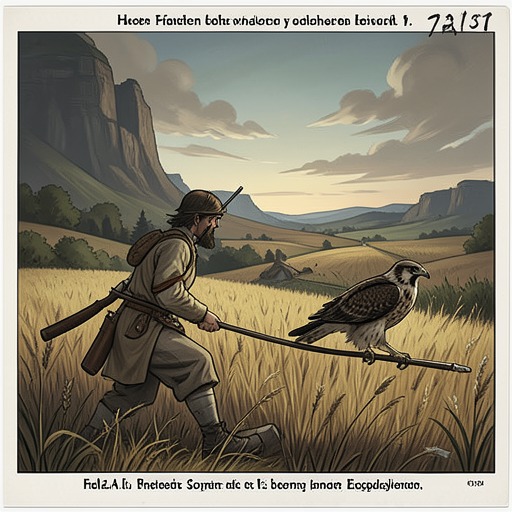
H is for HawkOld England is not a surviving historical landscape but an idea assembled from images and selective memory. In the narrator’s encounter with a man who treats it as a reassuring remnant of the past, the phrase becomes a test of what gets counted as belonging—and what histories and forms of life that comforting picture leaves out.
A landscape made by imagination
The man presents the countryside as a real piece of Old England, still intact despite immigration. The narrator does not answer him. The silence, followed by a rain-soaked walk home with the hawk, leaves the claim to trouble her: she recognizes in it a way of turning a complicated landscape into a reassuring story of national belonging.
Her thoughts resist that simplification with histories that cross the boundaries the phrase implies. Finnish goshawks made the Brecklands their home; her grandfather, born on the Western Isles, spoke only Gaelic until he was ten; and a Lithuanian builder she met gathering mushrooms wondered why people he had met in England could not identify edible fungi. These details make the land’s past neither culturally pure nor easily reduced to a single inheritance. The narrator also recalls the chalk-cult’s myths of blood and belonging and German plans to exclude Jews from forests, linking pastoral idealization to a history in which claims about land could serve exclusion.
The costs of selective memory
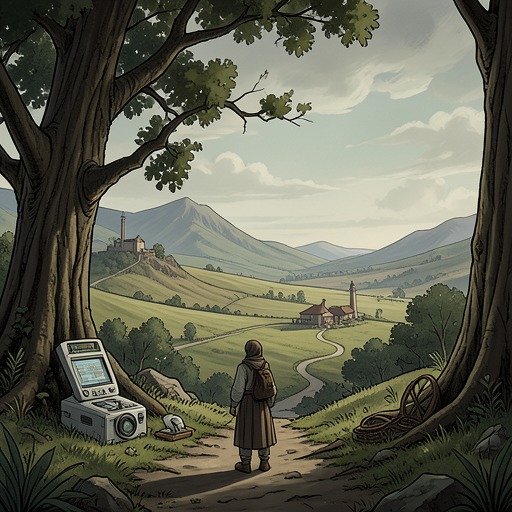
Old England is described as a place made from words, woodcuts, films, paintings, and picturesque engravings. Its apparent solidity comes from representations, not from an unchanged countryside. The narrator argues that people have short lives and look too narrowly to grasp ecological time: soil life is easy to disregard, climate change difficult to imagine, and the lives that preceded human settlement hard to remember. Images can offer consolation, but they can also erase the histories of the hills.
The contrast is visible in the fields. Those where the narrator flies Mabel near Cambridge are organically farmed and teeming with life; the fields encountered on this walk look familiar at a distance but are biologically impoverished. Chemical spraying has left few plants beyond crops and few bees or butterflies. The absent species mark that loss across generations: turtle doves disappeared within ten years, corn buntings and large flocks of lapwings within thirty, and red-backed shrikes, wrynecks, and snipe within seventy. Ravens and black grouse, present two centuries earlier, are gone too. The landscape may resemble a remembered pastoral scene while being fundamentally unlike the country of a century or four centuries before.
From escape to responsibility
The narrator’s criticism turns inward as well as outward. She had wanted the hawk to be an escape from history—to forget death and the violence attached to earlier uses of hawks and landscapes. On the walk home, she judges that flight from the past dangerous, not liberating. Her regret at having stayed silent before the couple becomes a resolve to resist forgetting and to argue for landscapes alive with variety, rather than to defend places merely because they resemble an image of who people think they are.
Old England therefore names both a seductive picture and a problem of attention. Its imagined continuity depends on looking past migration, historical conflict, and ecological disappearance. Against that narrowed vision, the narrator sets a more demanding attachment to place: one that remembers layered histories and values the life actually present, as well as the lives already lost.